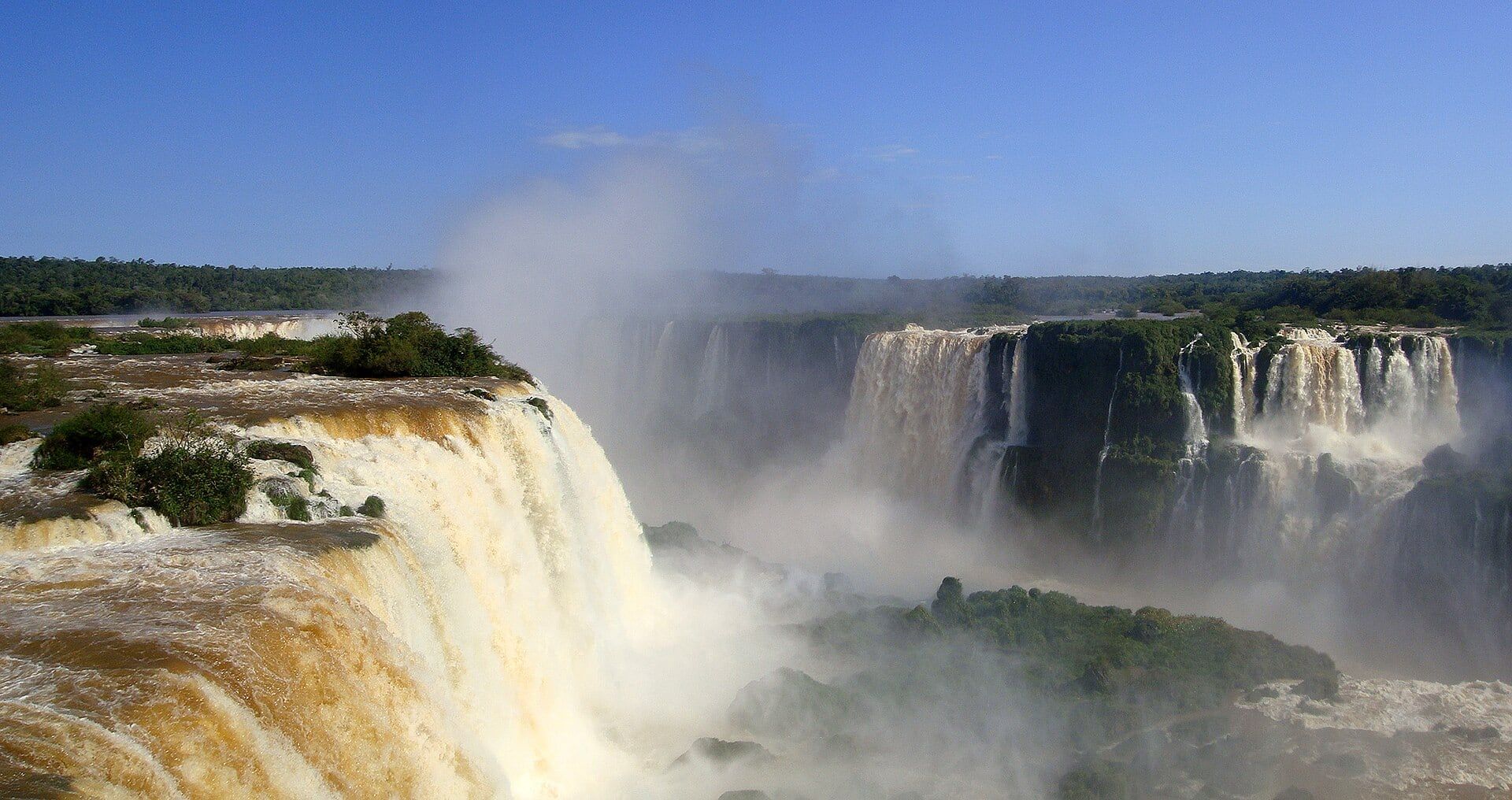
Iguaçu Falls is on the Iguaçu River, on the border between Brazil and Argentina. Each country protects its own bank in a national park: Iguaçu National Park in Brazil and Iguazú National Park in Argentina, both recognized by UNESCO as World Natural Heritage Sites.
Both sides show the same falls from different viewpoints. To decide whether to see one side or both, use the Brazil vs. Argentina comparison tool.
How much time to set aside
- Brazilian side: the main visit usually fits into half a day.
- Argentine side: plan for the whole day, including the crossing and immigration.
- Both sides: on different days, starting with the Brazilian side to get the big picture.
Tickets
Always buy through each park’s official channels. Prices vary by nationality, age and season, and change throughout the year — which is why this guide does not publish ticket prices. Check the official website close to your visit date.
What to bring
- A rain poncho or clothes that can get wet: near the falls, the spray is intense.
- Protection for your phone and camera.
- Water, sunscreen and comfortable, non-slip shoes.
- A valid ID document if you are going to the Argentine side.
When it rains
Rain does not prevent a visit, but it makes the walkways wet and can reduce visibility. During major floods, some sections may be closed for safety. Check the official notices on the day.
Accessibility
The official website for the Brazilian side has an accessibility page. On the Argentine side, confirm on the official website which circuits and services are accessible. People with reduced mobility should check before buying a ticket.