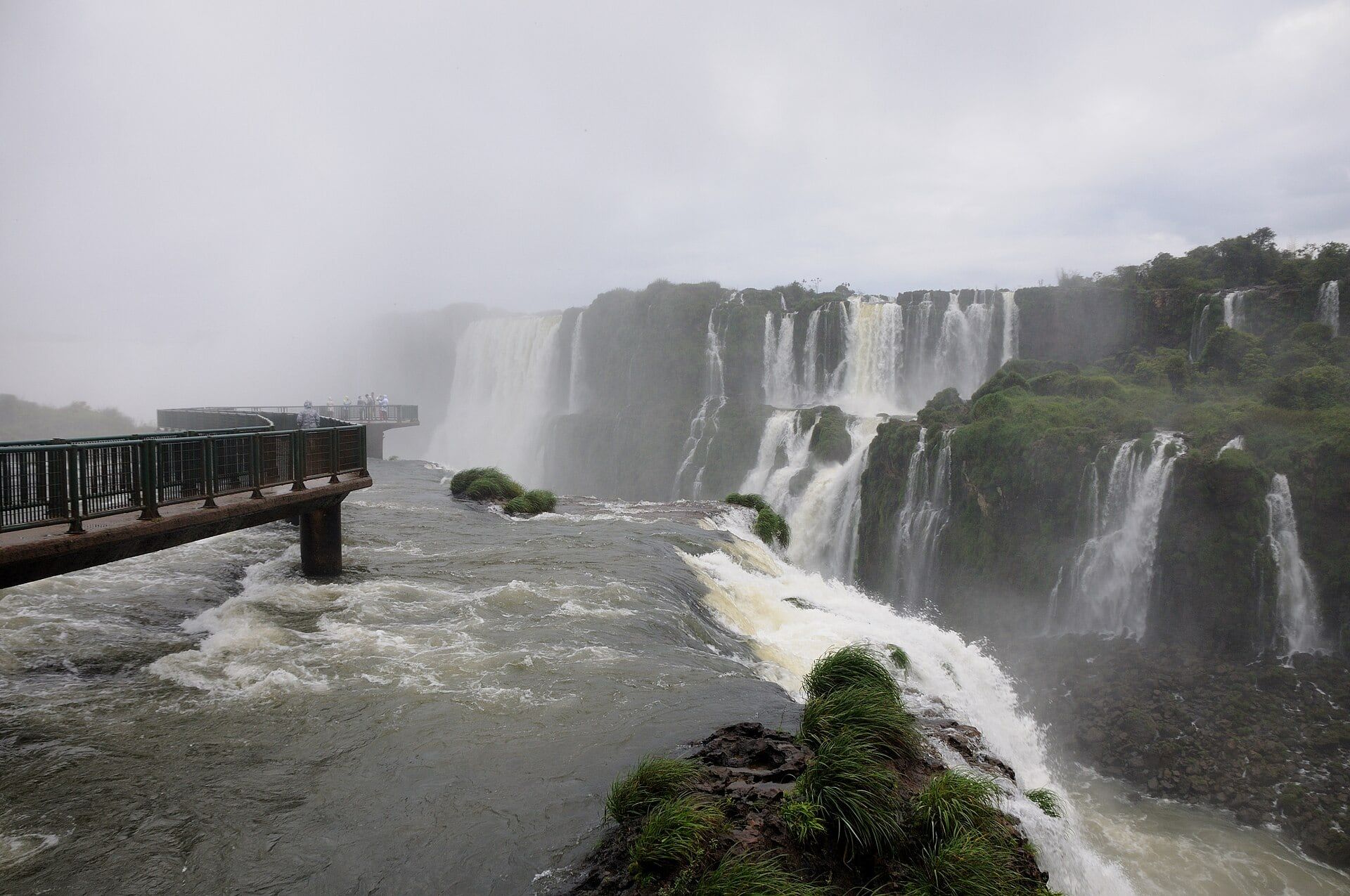
There is no single “best time”. Foz do Iguaçu welcomes visitors all year round, and each period has its advantages and things to watch out for. Instead of promising good weather, this guide shows how to weigh the factors.
Crowds and prices
School vacations, long holiday weekends and weekends in general tend to concentrate visitors. On those dates, lines at the attractions and at the border bridges tend to be longer, and accommodation can get more expensive or sell out. If your dates are flexible, weekdays outside vacation periods are usually quieter.
Heat, cold and rain
The region has hot, humid summers and winters that can bring cold days. It rains throughout the year. In practice:
- in the heat, plan the trails for early in the day and bring water and sunscreen;
- in the cold, bring layers — near the falls, the spray gets you wet;
- in any season, have a rain poncho and a plan B for rainy days.
Check the forecast from an official weather source close to your travel date.
Water volume at the Falls
The volume of the falls depends on rainfall in the Iguaçu River basin and varies a lot. During very rainy periods, the volume increases and, for safety, some walkway sections may be temporarily closed. During dry spells, the volume decreases. Before you go, check the notices on the official websites for the Brazilian side and the Argentine side.
Practical summary
- Want shorter lines: avoid school vacations and public holidays.
- Traveling with kids: prioritize thermal comfort and shorter days.
- Want to see the Falls at full flow: follow the news and official notices in the preceding weeks.